

The Day That Decides 30 Years vs. 3
If you're researching custom gunite pool builders in Leander, Cedar Park, Georgetown, or anywhere in North Austin, you've probably read a lot of sites that all say the same thing: quality craftsmanship, attention to detail, five-star service. Those words are easy to write. What's harder to find is a builder who'll walk you through exactly what happens on the days that decide whether your pool holds up for thirty years or starts giving you trouble in three.
Plaster day is one of those days. Here's what actually happens, step by step.
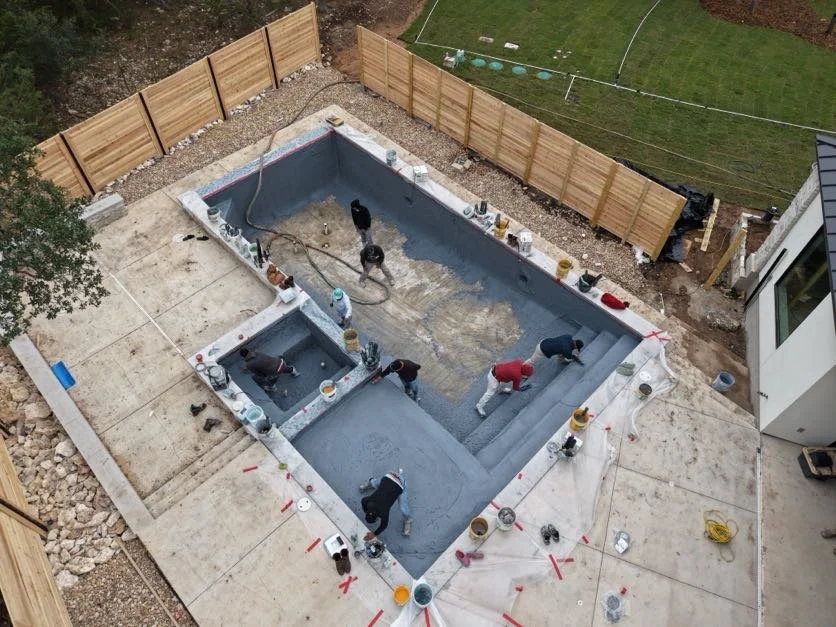
Day One: Plaster Application
When plaster first goes on, don't expect much. It comes out flat, chalky, and gray, nothing like the color you picked out on a sample board. That's normal. The finish you chose is in there, it just hasn't been brought out yet.
If you went with a darker plaster color, this stage is worth paying closer attention to. Dark pigment is less forgiving than light pigment. Any inconsistency in how the plaster is applied becomes more visible once the color is exposed, so there's less room for a rushed job to go unnoticed.
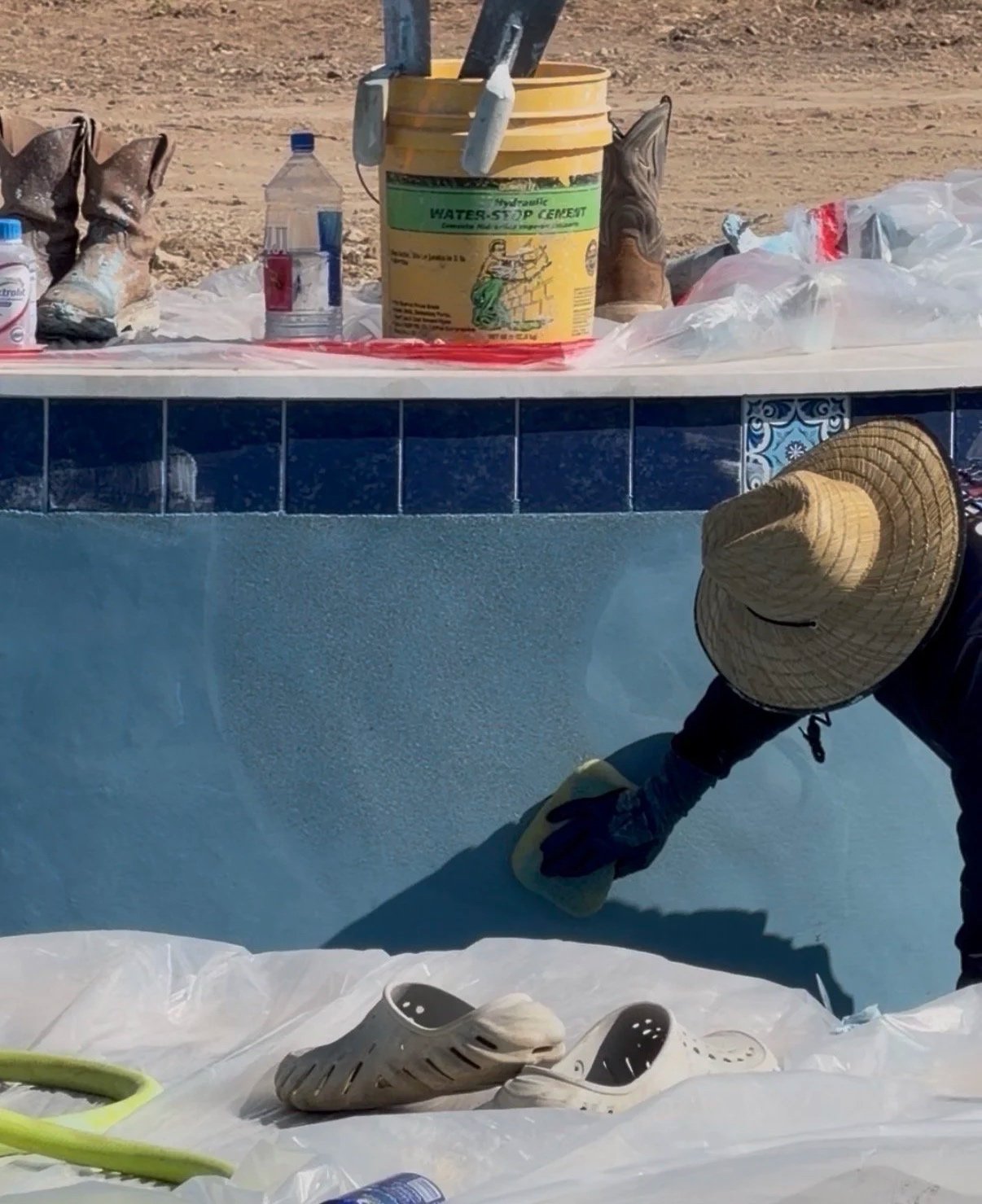
We also offer a product called Micro SetNCure (a stain-resistance upgrade at this stage), worked into the plaster during application rather than added afterward. That's part of what keeps a finish looking right years down the road instead of just on move-in day.
Day Two: Acid Wash and Detail Work
The next day is acid wash day. This step strips back that initial chalky layer and brings out the actual color and texture underneath, the stuff you picked out and were told to picture. Rush this step and the finish stays dull, no matter how good the plaster material was.
Once that's done, the smaller hardware goes in: drain covers, return jets, bubble covers. It’s the last couple steps before you and your family get to jump in for the first time.
Filling the Pool the Right Way
Here's a step a lot of builders skip past. The easy way to fill a pool is to run a garden hose in with regular tap water and deal with whatever comes up afterward. The problem is tap water carries minerals and impurities that can etch or stain plaster that's only a few days old and still settling in. When that happens, the usual fix is a heavy dose of chemicals after the fact, which puts extra stress on a surface that's already at its most vulnerable.
We treat the water on the way in instead. Using an Orenda Barrel System, the fill water is balanced before it ever touches the plaster, so you get clean, properly balanced water from the first drop, not a scramble to correct staining later. This step matters even more on darker plaster, where any imperfection introduced during the fill is far more visible.
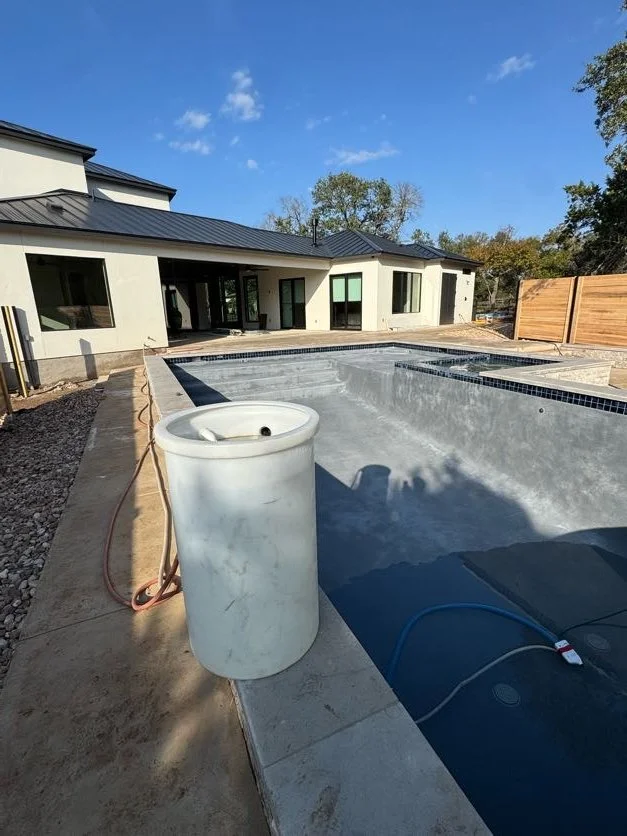
Startup: When the Pool Comes to Life
Once the water reaches about three inches above the waterline tile, the hose shuts off and the equipment turns on. The pump and filter take over, circulating and continuing to balance the water as the pool settles in. For most homeowners, this is the day it finally feels real. After weeks of excavation, steel, gunite, and detail work, this is when it all comes together into the finished pool you set out to build.
A Fair Question to Ask Any Builder
None of these steps show up in a typical construction photo, and most builders won't walk you through them unless you ask. But they're the difference between a pool that still looks new in ten years and one that starts showing staining or buildup long before it should.
If you're comparing custom pool builders across North Austin, Cedar Park, Leander, Round Rock, Georgetown, Lago Vista, Taylor, Jarrell, or Hutto, ask any of them this: what does your plaster and startup process actually look like, step by step? A builder who can answer in detail is telling you something real about how they work.
📞 Call us today at (512) 883-POOL or visit email to schedule your free consultation. Let’s make 2026 the year you finally build the pool you’ve been dreaming about.