

The Spa Detail Nobody Tells You About
Most people planning a custom spa spend their energy on the big decisions size, jet count, tile color, how it ties into the pool. Few ever think about the edge. But the edge is the one part of the spa your body actually touches for the entire time you're soaking in it, and that's exactly why the rolled neck beam deserves more attention than it gets.
What Is a Rolled Neck Beam?
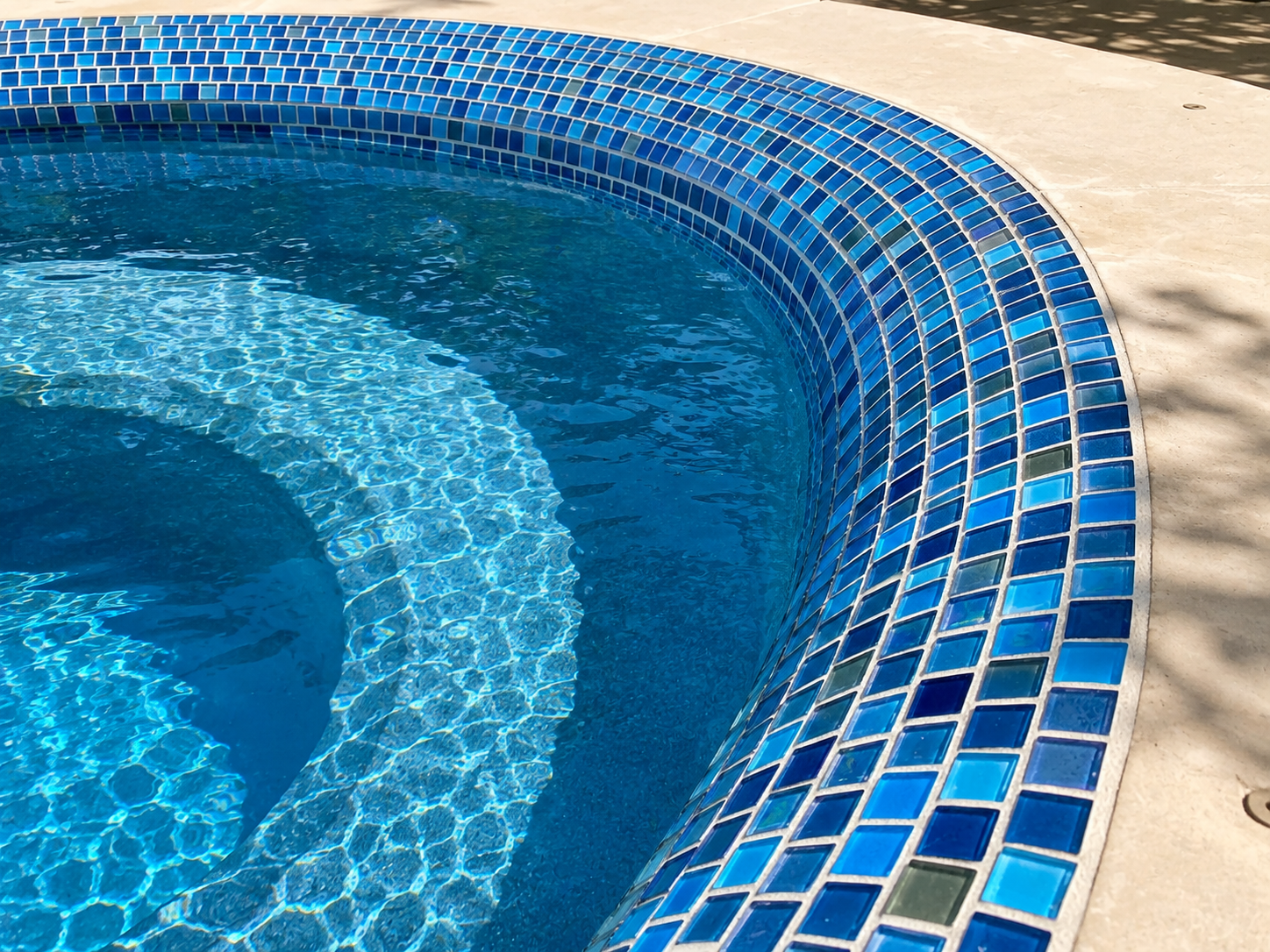
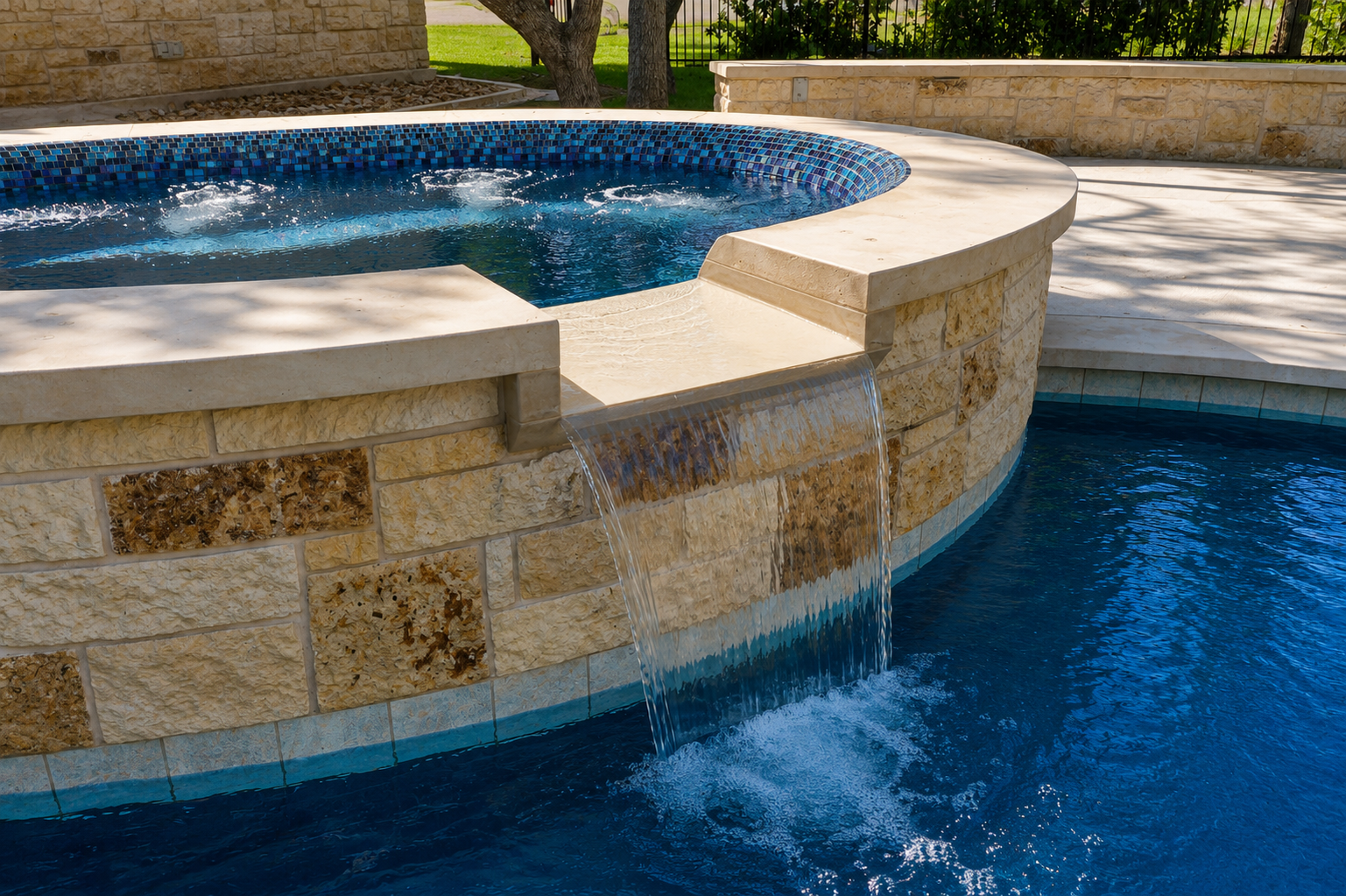
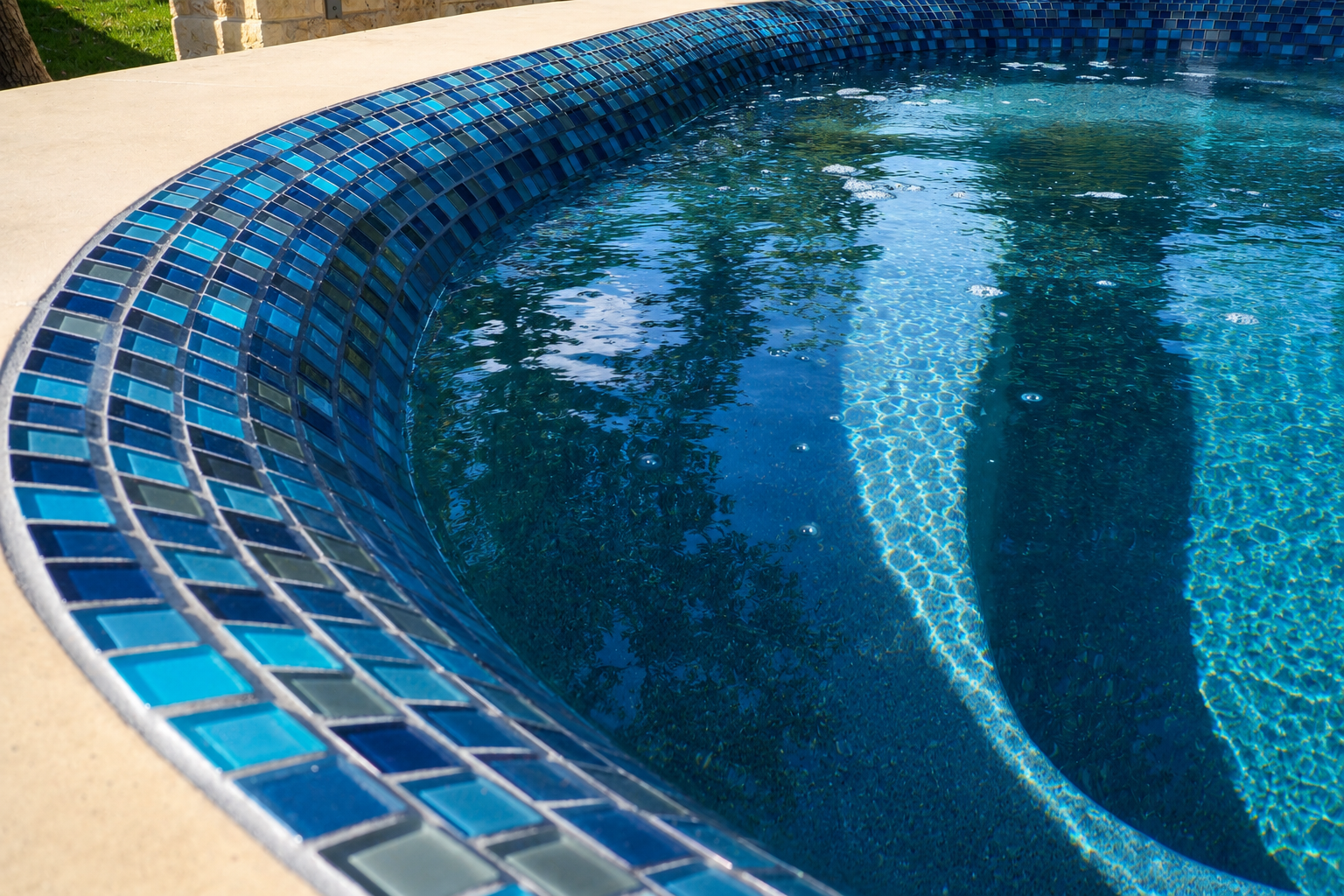
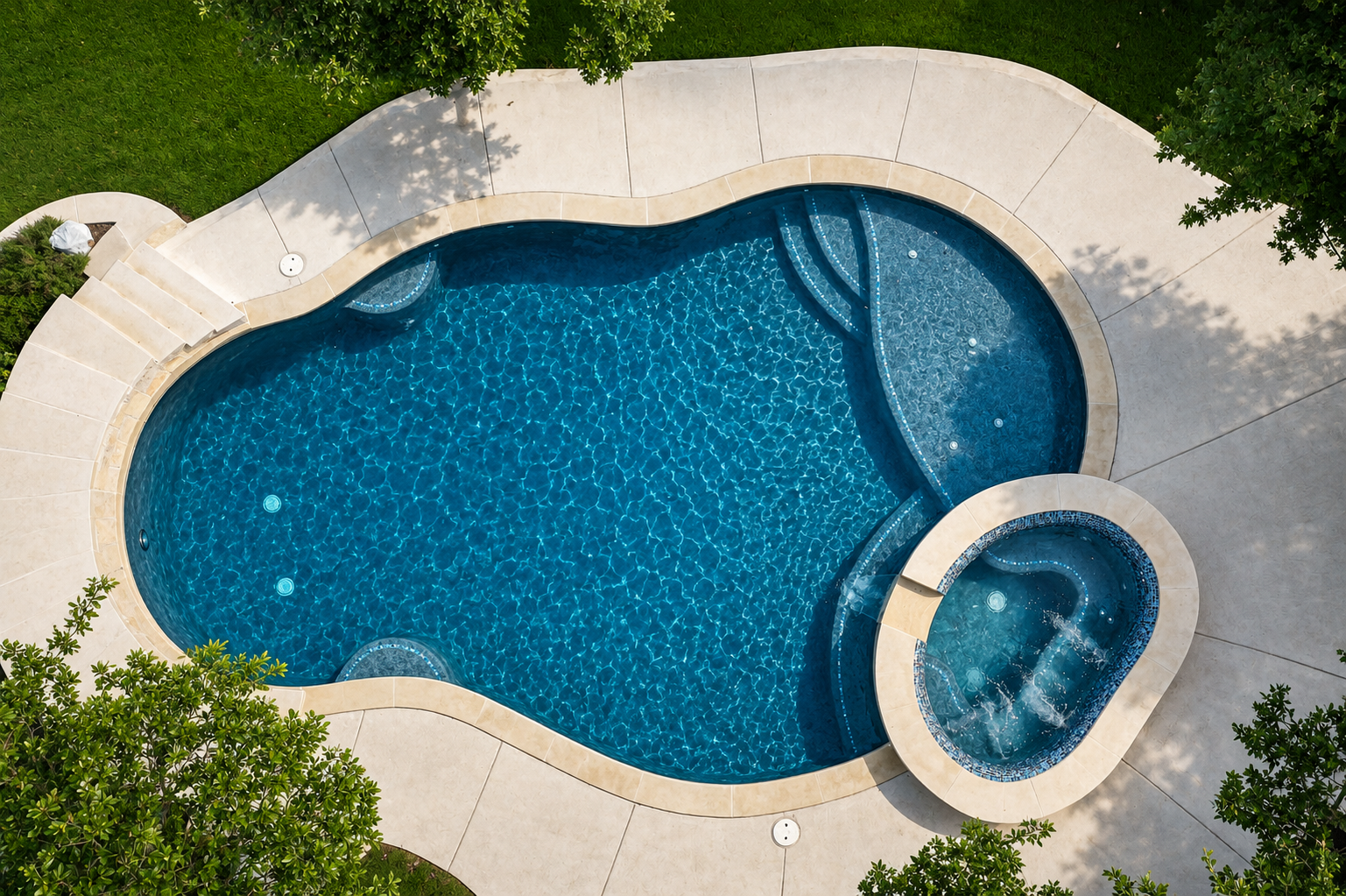
The "beam" is the raised wall that forms the top perimeter of a spa, the part that separates the water from the surrounding deck or pool. On the vast majority of spas, that beam is finished with a honed (softly rounded) edge or a squared-off edge. It looks clean in a rendering, but it's not built with your neck in mind.
A rolled neck beam takes that same top edge and gives it a smooth, rounded profile, literally rolling the surface so there's no hard corner where the beam meets the waterline. Instead of resting your neck against a flat ledge or a 90-degree edge, you're leaning into a soft curve that's shaped to actually support you
Why It's Worth Considering
Spas are meant to be a place to unwind, and the whole point of leaning back against the edge is relaxation. A squared or honed edge works fine for sitting up, but the moment you tilt your head back and let your neck rest on it, that hard line becomes uncomfortable fast, especially during a longer soak.
The rolled neck beam solves that problem at the source. Because the curve is built into the coping itself, there's no pressure point digging into your neck or the base of your skull. It's a small structural change, but it's the difference between a spa you tolerate for ten minutes and one you actually want to sink into for thirty.
Why More Spas Don't Have One
Honestly, there's no great reason: it mostly comes down to habit. Squared and honed edges are the industry standard because they're simpler to form and finish, and most builders default to what's easy to execute rather than what's most comfortable to use. A rolled neck beam takes more precision in the coping and tile work, particularly on curved spa walls, which is part of why it's still a rare request.
But given how directly it affects the everyday experience of the spa, it's a feature that arguably should be far more common than it is.
What Does It Cost?
This is usually the first question once people see one in person, and the answer tends to surprise them: not much more. Because a rolled neck beam takes extra time and precision to form and tile, especially on curved spa walls there is a modest upcharge over a standard honed or squared edge. But it's a small premium, not a major line-item jump. In the context of a full custom pool and spa build, it lands right in line with a standard design.
Given how much it changes the day-to-day comfort of the spa, it's one of the easiest upgrades to justify. The added cost is minor. The benefit an edge that actually feels good to relax against, every single time you use it is priceless.
If you're designing a custom spa and comfort is part of the goal not just the look of it in photos, the rolled neck beam is worth asking your builder about. It's a detail most homeowners never know to request, but it's exactly the kind of upgrade that makes the difference between a spa that photographs well and one that actually gets used.